


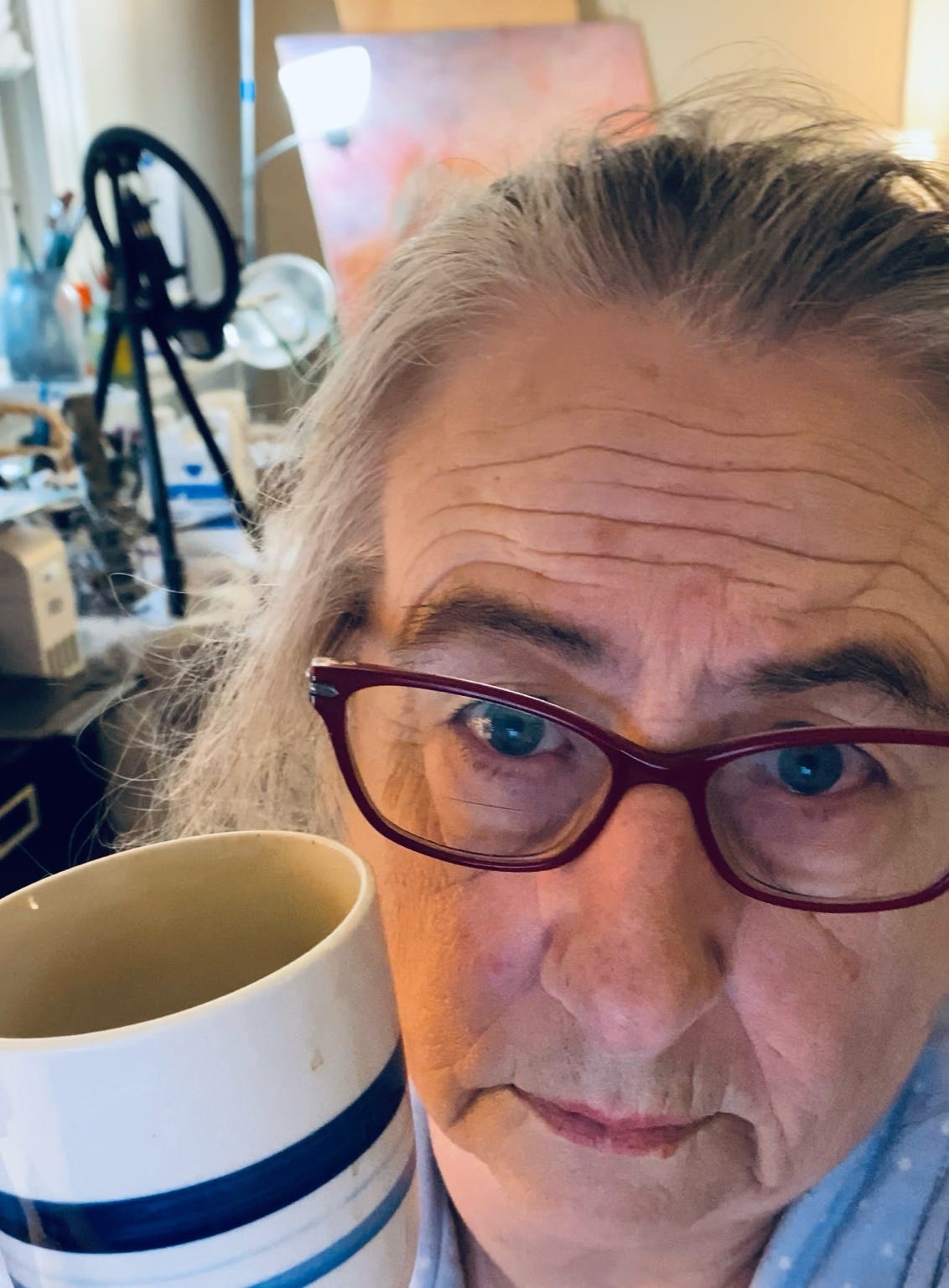
The Lie I Carried for Seventy Years
I was the uh-oh baby.
That’s what they called me at cookouts and family gatherings, laughing as they told the story of how my mother tried to hide the pregnancy. Born seventeen years after my oldest brother. Eight years after the next. The one nobody planned for. The one nobody expected.
People laughed when they told that story.
I didn’t.
Because underneath the laughter was a message I absorbed before I had language for it:
You weren’t supposed to be here.
That was the first lie.
It wouldn’t be the last.
I was six years old when shame came to live inside me permanently.
Something happened that never should have. A trusted adult in my family crossed a boundary that changed everything — not in a way I could explain or report or understand with a six-year-old’s mind, but in a way my body knew immediately and completely.
It was wrong.
And nobody talked about it.
No one told me I was safe. No one said it wasn’t my fault. No one came.
So I stayed quiet. And in that silence — in the space where someone should have said this is not yours to carry — shame moved in and unpacked its bags and started rearranging the furniture.
Not guilt. Guilt is about something you did. This was different.
This was the belief that I was wrong. That I was the reason. That something in me had invited it, deserved it, caused it. That if anyone ever found out the real truth of me — not just what happened, but what I believed it said about me — I would be rejected. Blamed. Abandoned.
So I carried it.
Into my teens. My marriages. My motherhood. My art. My silence. My hiding.
For seventy years I carried a lie someone else put down inside me when I was six years old and didn’t know how to refuse it.
There’s a memory that still visits me.
I was driving through a quiet cul-de-sac, on my way to visit someone. The kind of neighborhood you’d see in a family sitcom — trimmed lawns, wind chimes, basketball hoops, fathers mowing, mothers visible through kitchen windows, children weaving lazy circles on bikes in the street.
And I felt it.
Not envy. Not longing, exactly.
Displacement.
Why couldn’t I have that?
Why did that version of life — that ordinary, unremarkable, completely available version of belonging — feel like something other people were permitted and I was not?
I was married to the preacher at the time. We lived in the parsonage — a house that belonged to the church, never to us. He showed up for meals. For sermons. For the congregation.
Not for me.
And sitting in that car, surrounded by scenes of ordinary joy I couldn’t access, I felt like a woman with her face pressed against glass. Looking at a life that was right there. That close. That ordinary.
That unavailable.
I told myself I was just jealous. Just tired. Just being dramatic.
But now I know what it was.
It was shame whispering its oldest lie:
You’re not like them. Something in you disqualifies you. You were not supposed to be here.
And I believed it. I swallowed it whole. I wore it like an invisible uniform for decades and kept moving, kept functioning, kept showing up — smaller than I actually was, quieter than I actually felt, safer inside the cage I’d decorated so carefully I’d stopped noticing the bars.
The reckoning didn’t arrive as a breakdown.
It arrived as a video.
A few minutes of someone explaining the difference between guilt and shame — and something inside me cracked open so suddenly I had to sit very still and let it happen.
I paused it. Rewound it. Watched it again.
Shame says: I am a mistake. Guilt says: I made a mistake.
And right there — in that ordinary moment, on an ordinary day — I understood something I had spent seventy years not understanding:
I had never been carrying guilt.
I had been carrying shame.
I had done therapy. Read the books. Meditated. Journaled. Led others through their healing while something in me still quietly throbbed with a pain I couldn’t locate because I had been calling it the wrong name for my entire life.
It wasn’t guilt. It was never about what I did.
It was about who I believed I was.
And finally naming that —
it didn’t erase the pain.
But it took the poison out of it.
I started mourning then. Really mourning.
Not dramatically. Just honestly.
Mourning all the years I spent trying to be lovable by being small. Mourning the moments I held back, isolated, constructed a version of myself that others could accept without ever seeing the real one underneath. Mourning the way shame had convinced me that I needed to earn my place in every room I entered.
I used being an artist as cover for years. Artists are allowed to be odd, private, hard to reach. I used that permission like a shield. It let me move through the world without having to explain why I couldn’t fully show up.
But those weren’t quirks.
They were symptoms.
Symptoms of a root wound planted in me before I was old enough to protect myself from it.
And the moment I named it — the moment I stopped calling it guilt and started calling it shame and stopped calling it my personality and started calling it a lie —
I found the key.
The key to the cage I’d been living inside for seventy years.
It had been in my pocket the whole time.
Here is what I know now.
I didn’t isolate because I hated people.
I isolated because I didn’t trust myself to withstand being seen. Because I didn’t believe I could enter a room without being found out. Because the six-year-old who stayed quiet had grown into a woman who still believed that silence was the safest thing she had.
But I am not six years old anymore.
And I am done being quiet about the thing that marked me.
I’m not wrong. I was hurt.
I’m not broken. I was silenced.
I’m not disqualified. I was lied to.
The lie said I wasn’t supposed to be here.
Seventy years later — still here. Still painting. Still writing. Still becoming something the six-year-old in the cul-de-sac couldn’t have imagined.
Not because the wound disappeared.
Because I finally stopped letting it make decisions for me.
If you’ve been carrying something nameless —
if you’ve spent years calling it guilt when it was actually shame —
if you’ve ever sat in a car outside someone else’s ordinary life and wondered why that version of belonging felt like something you weren’t allowed to have —
this is for you.
You were not wrong.
You were hurt.
You were not broken.
You were silenced.
You were not disqualified.
You were lied to.
And you don’t have to keep paying rent on a lie that was never yours to begin with.
The key is in your pocket.
It always was.
If something in this piece cracked something open in you —
if you’ve been carrying a name for something that was never quite right —
you don’t have to keep figuring it out alone.
Every Tuesday evening a small group of women meets with me on Zoom for the Breakthrough Circle.
Not therapy. Not a workshop. Not someone with a framework telling you how to heal.
A conversation between women who are done being quiet about the things that marked them — and are figuring out together what it means to finally stop paying rent on lies that were never theirs.
We say the things that don’t get said at dinner.
We name what needs naming.
We hold space for the woman who is still becoming — at 60, at 70, at any age — without pretending it’s tidy or finished or certain.
Right now annual membership is 20% off.
Which means the nag that brought you to this article — the one that’s been whispering there is still more of you that needs tending —
just saved you money.
I’d listen to it.
Join at 20% off →
The things you've never said out loud? We say them on Tuesdays.
And if something in this piece made you pause, nod, or feel a little less alone — please give it a heart before you go. That one small tap tells the algorithm this conversation matters. It puts these words in front of another woman who needs to hear them today. She's out there. Help me find her.
This is a wrenchingly raw and honest piece of healing you have shared and I am so grateful and awed by the strength and openness you demonstrate through the power of your words. For so many millennia women have covered their heads to protect themselves from the shame heaped on them by the forces of dominion. We live in dangerous days but these are the days of emergence of feminine power returning, breaking open, speaking truth to dominion and reclaiming our wisdom, life and generative strength. Thank you for openly claiming that for yourself and modeling the path for all of us. Raw honesty!
I have felt like a refugee in my own life so many ages and now at almost 75 I climb again to a place where I can stand tall (all four foot ten inches of me!😊) and keep moving upward and onward. Thank you for creating and sharing a space of power and leadership as we do not need to be alone in shame and guilt and suffering. It is women who will birth a new world and the old women who carry the sacred within them who wade in the deep waters of change who will lead.
Again and again you post a story that resonates with something I've been working out in my mind. Two times in the past week I noticed my reaction to a couple of instances. My thoughts were toxic. Thank goodness I picked up on it immediately. And the reactions were shame based. My dreams of late are nudging me to be seen and to be heard which is uncomfortable for me. The discomfort comes from needless shame! Your story is SO timely! And I hear you and feel the mourning for all the years wasted. But hey! It's never too late and we have more life to LIVE.