

It Was a Bra (And I Realized We’ve Been Duped)
Let me ask you something nobody ever asked me:
Who decided you had to be uncomfortable just to be considered put together?
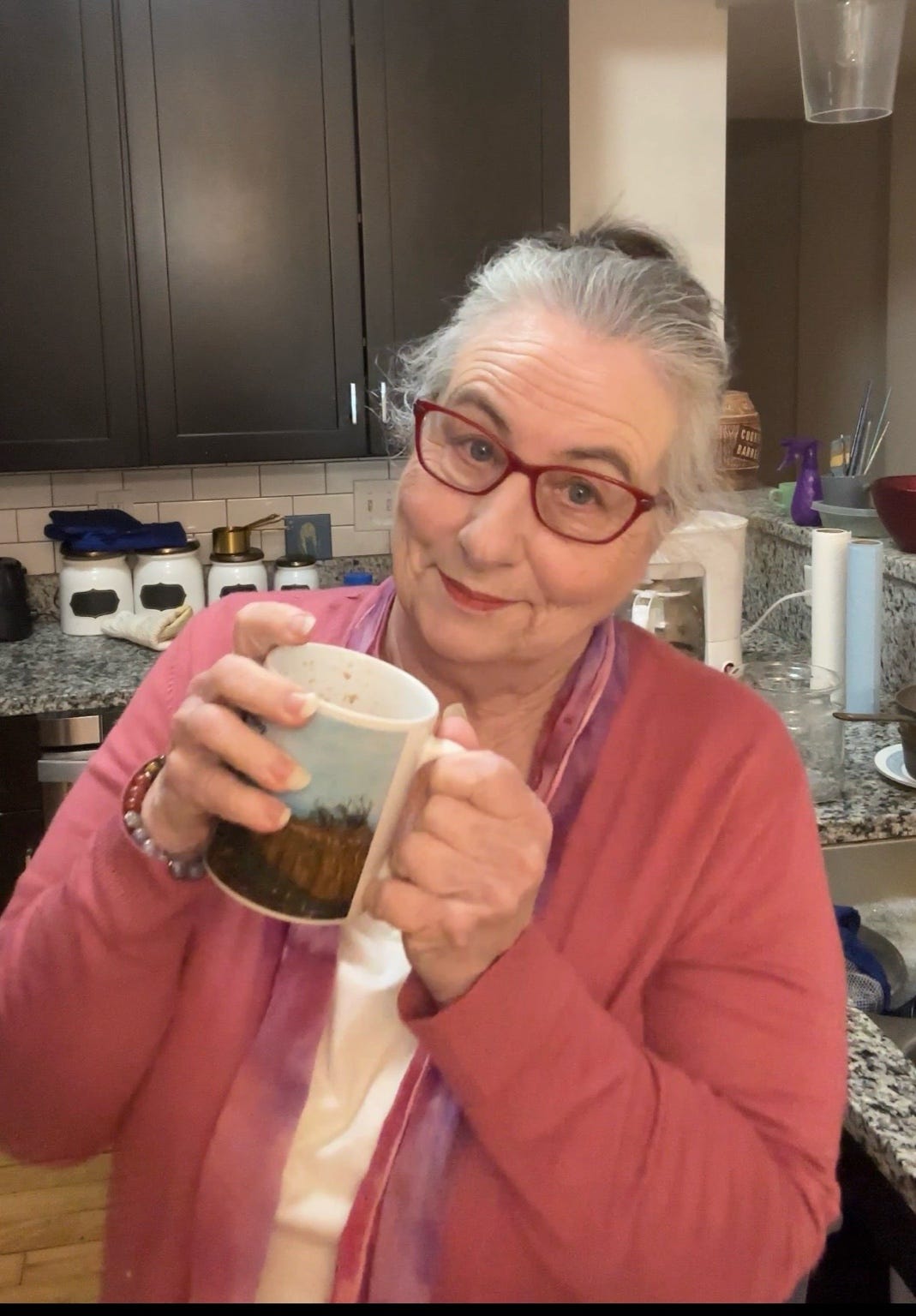
Yesterday afternoon I found myself standing in my own kitchen, in my own home, resisting something so ordinary it would have gone unnoticed any other day. I did not want to put on a bra. Not because I was making a statement, and certainly not because I was trying to prove anything to anyone. I simply did not want to feel restricted in my own body while going about a quiet day.
What struck me was not the resistance itself, but the reflex that followed it. For decades I would have overridden that feeling without a second thought. I would have told myself it was necessary, that it was part of being presentable, part of being a woman who still had herself together. But this time I paused. I listened to that small, quiet no.
And once I did, something opened.
Because the question that rose up was not really about the bra. It was about how many things I have been doing for years — even decades — not because they felt right, but because I was taught they were.
The history of the bra, as it turns out, tells a revealing story. In the early twentieth century it emerged as a practical alternative to the corset, which had quite literally constrained women’s bodies to the point of physical distortion. The earliest versions were soft, often homemade, and designed to allow movement and comfort. They represented, in a very real sense, a genuine step toward freedom.
But freedom, it turns out, is bad for business.
By the middle of the century, companies like Maidenform began to transform not only the garment itself, but the meaning attached to it. The language shifted. Support gave way to shaping. Comfort gave way to correction. Advertising campaigns introduced phrases like “lift and separate,” promising a youthful silhouette and a proper form — as though the natural body required improvement simply to be acceptable.
What was being sold was no longer a piece of clothing. It was a standard.
That standard — firm, upright, contained — quietly became the measure against which women judged themselves. And because it was repeated so consistently across magazines, advertisements, and eventually television, it stopped feeling like an invention. It began to feel like a truth. Like common sense. Like just the way things are.
Nobody sat us down and explained what was happening. We absorbed it gradually, almost invisibly, until we couldn’t tell the difference between a choice we’d made and a condition we’d inherited.
Meanwhile, the body itself continued to do what bodies do. It changed. It softened. It shifted in response to age, gravity, and a life lived fully. There is nothing abnormal in that. In fact, it is the most natural thing in the world.
And yet the standard never changed alongside it.
So we learned to adjust ourselves instead. To correct, to contain, to manage what was never actually broken. Over time that adjustment stopped feeling like a choice and started feeling like a requirement. We called it normal.
But normal is not the same as true. And it is certainly not the same as chosen.
Standing in my kitchen, what I understood in that moment was not simply that I didn’t want to wear a bra that afternoon. I understood that I had been choosing discomfort out of habit — not necessity — and that the habit itself had been handed to me long before I ever thought to question it.
That is what it means to be duped. Not that someone lied to your face. But that an idea was repeated so many times, in so many places, that it quietly became part of how you saw yourself — and you never noticed it happening.
Once you see that in one place, it becomes very difficult not to see it everywhere.
You begin to notice the quiet ways you override yourself. The automatic yes when something in you is clearly saying no. The routines you maintain long after they stopped serving you. The version of yourself you keep performing because it is familiar to others, even when it no longer feels like you.
This, I’ve come to believe, is the deeper cost of having been duped. Not the garment. Not any single habit. But the slow, cumulative erosion of trust in your own knowing — the years of deferring to what you were taught instead of what you actually feel.
Reimagining your life is often presented as something dramatic, as though it requires a sweeping reinvention or a bold external change. But more often than not it begins in much quieter places. It begins with a moment of honesty about what no longer feels right, and a willingness to stop participating in it simply because it is familiar.
Yesterday that moment happened to involve a bra.
Tomorrow it may involve something else entirely. A schedule that doesn’t match your natural rhythm. A role you’ve outgrown but continue to inhabit. An obligation you’ve carried for so long you’ve forgotten it was ever optional.
What many of us discover, when we’re willing to look closely, is that we don’t need new dreams nearly as much as we need to reclaim the ones we set aside in order to become who we thought we had to be.
And that reclamation does not begin with a plan.
It begins with a question.
Does this actually feel right to me?
It sounds almost trivially simple, and yet it has the power to reorder an entire life. Because once you begin to answer it honestly, you cannot unsee what you have been tolerating.
Yesterday the answer led me to set aside something I had worn without question for most of my life.
Today it was a bra.
But I am beginning to suspect it is not the only thing I’ve been wearing that was never really mine.
Before I close this, I want to acknowledge something important.
Not everyone has learned how to trust their own gut, their intuition, or that quiet inner knowing.
For many people, that connection has been overridden for so long it’s hard to even recognize it anymore.
So if you’re reading this and thinking, “I wouldn’t know how to trust myself like that,” that makes sense.
It’s also something you can rebuild.
I created Building Trust with Yourself to walk you through that process step by step, using the same approach I used to develop a steady, reliable trust in my own inner voice.
If that’s something you’re ready for, you can find it here:
And before you go, let me just say this.
If you find yourself thinking about any of this later tonight… or tomorrow… or next week… you might really enjoy being part of what we’ve been building on Tuesday nights.
It’s a small group. We gather on Zoom, talk through what’s actually coming up in real life, and there’s something about hearing other people say the quiet things out loud that changes everything.
I include it for my paid subscribers, along with a copy of my Breakthrough guide, so you have something to work with between conversations.
No pressure, no performance. Just real people, real lives, and a space where you don’t have to override yourself anymore.
If that sounds like something you’d like to sit in on, you’re welcome to join us.
I so agree. The conformity that came to mind for me was why does everybody think they need a perfect green flat grass yard that they invest hundreds of dollars and hours in luckily I live in the desert and have gravel and cactus and grasses. But I’m home alone. Why do I have my bra on?
I understand the post is about living and doing what we want and not what 'they' told us. But I can't resist a discussion on bras. I'm a member of a small minority that does not hate wearing a bra. I need the support plus I got fitted to ensure I am wearing the correct size. If a bra wearing person thinks the heavy lifting comes from the straps and not the band under your breasts, then yes, you are probably uncomfortable. Here's what I don't get about bras; why are so few front closures? My go-to brand is Spanx. Think about it, why have we tolerated back closures for so long. Ok, done and thanks for letting me vent.