


I Gave Myself Permission. Then I Filled the Space Right Back Up.
Yesterday, I wrote a great deal about permission. Permission to say no, to stop explaining yourself, to refuse unsolicited opinions, and to stop being the strong woman who can always carry one more thing.
All of those conversations were about putting down demands that no longer belong to us, but this morning I realized there is another part of the conversation I’d conveniently skipped, the way you skip the fine print because you already know you’re not going to like it.
What happens after we give ourselves that permission? What happens after we finally put the obligation down and find ourselves standing in the space it used to occupy, blinking, like we’ve never seen an empty room before?
That question came to me because something shifted in me over the past few days.
For months, I have been writing, posting, watching numbers, studying reactions, thinking about subscribers, and trying to understand what people wanted or needed from me. I built this work, I care about the women who gather around it, and I believe in what I have to say.
Still, somewhere along the way, the thing I created grew opinions of its own and began making demands, the way a houseplant you loved dearly eventually turns into a full-time hostage situation. It needed another article, another note, another idea, another response, and another reason for people to stay interested. It did not care that I was tired.
Very little in my life has ever cared that I was tired.
Because I was capable of doing all of that, I kept doing it. That is the trap of being capable — nobody warns you that competence is basically a life sentence with better lighting. Other people assume that because you can carry something, it belongs in your arms, and after a while you begin making the same idiotic assumption yourself. You stop asking whether the thing still belongs to you and begin measuring your worth by how long you can hold the position without your arms visibly shaking.
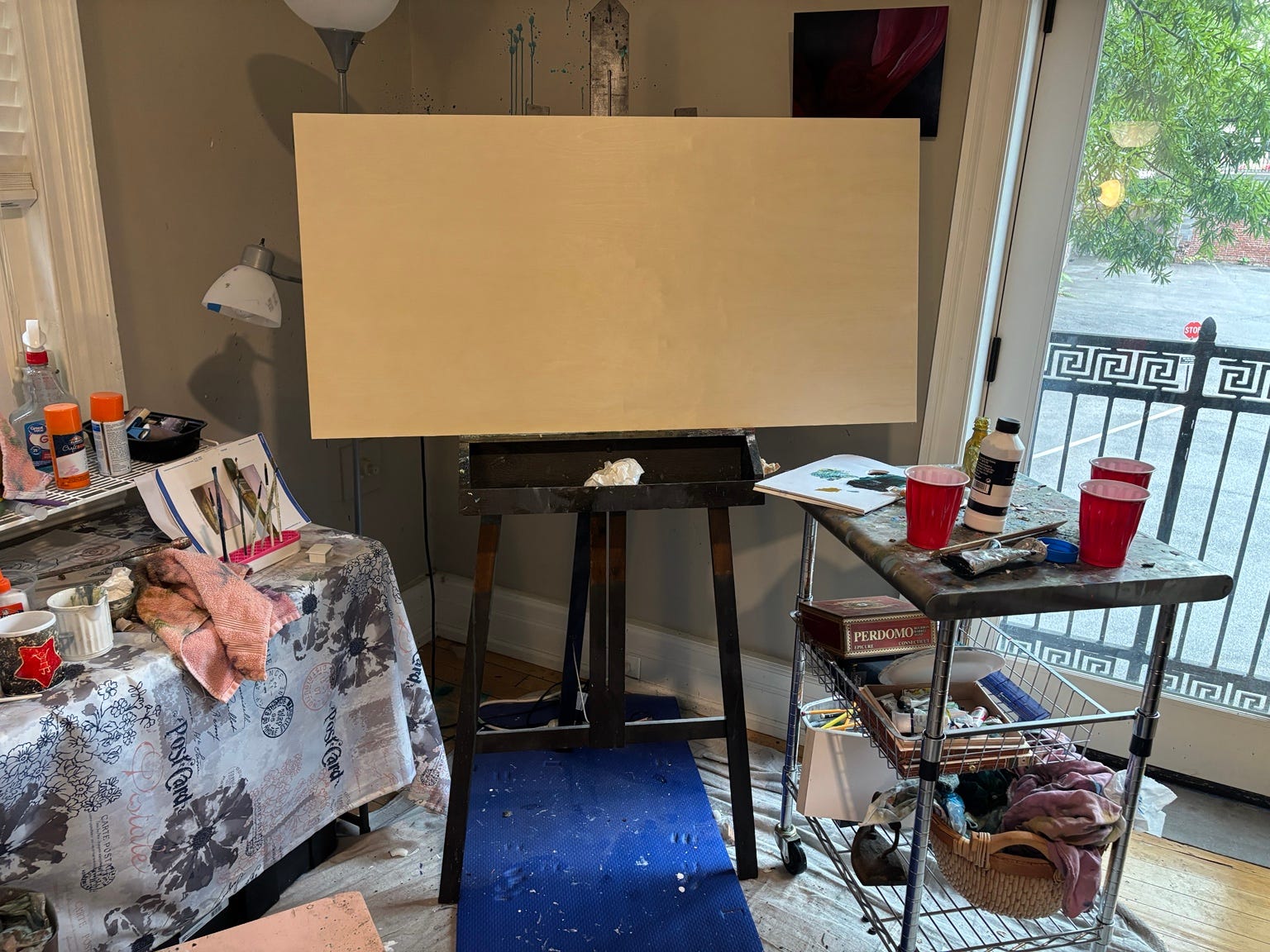
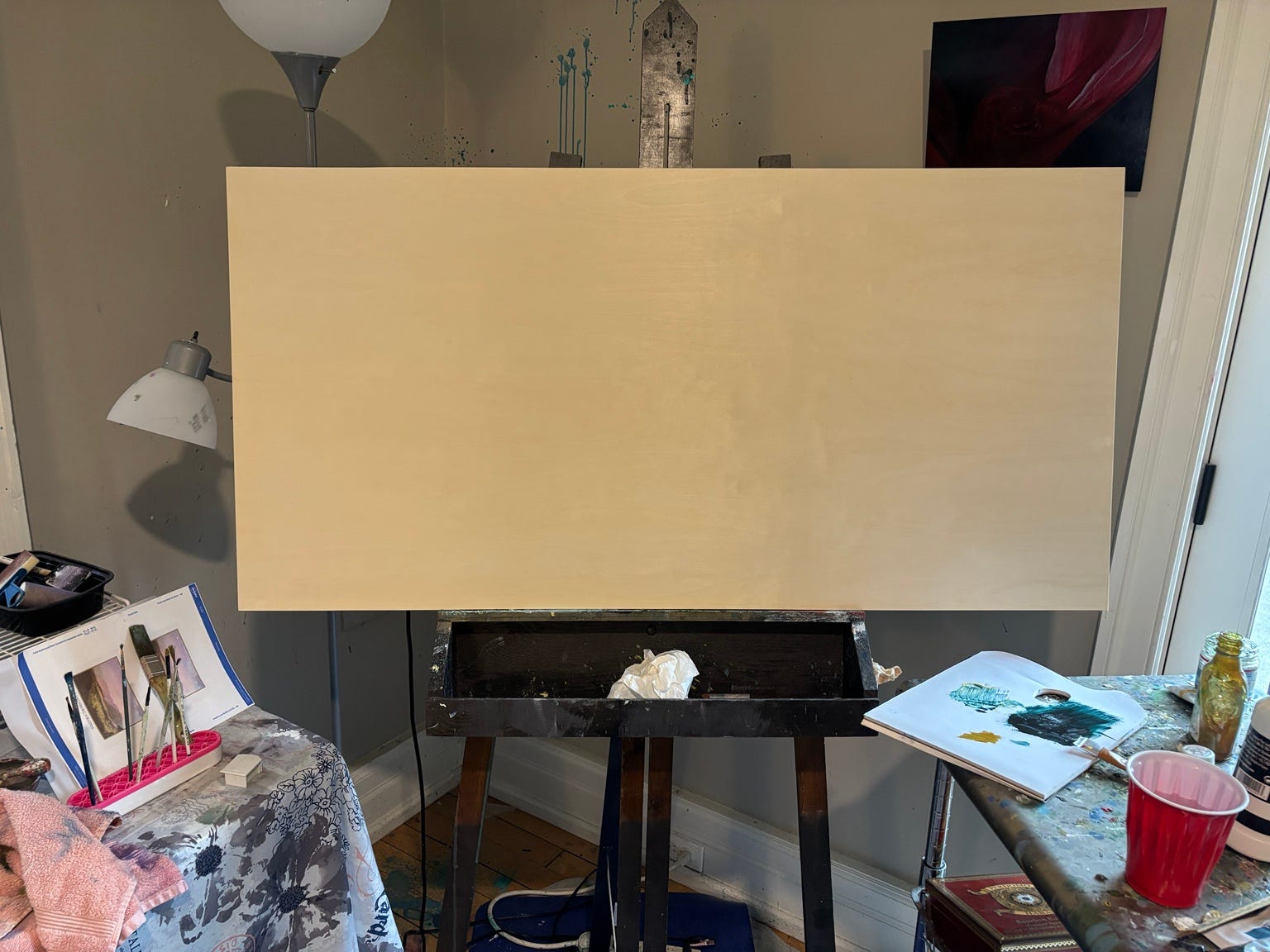
Then, a few nights ago, I began thinking about painting. Not how to sell a painting, turn it into a print, connect it to an article, or otherwise wring some content out of it. I simply wanted to paint, which is apparently a radical concept once you’ve spent enough decades being useful. I had a large piece of wood sitting on my easel and an idea for a landscape I wanted to create for someone I love. I could see the wide gray sky, the low horizon, the trees, the softened greens. Almost immediately, my mind went to brushes, paint mixtures, shape, light, space — and, notably, not one single thought about engagement metrics. Those metrics have a way of turning into nasty little gremlins, absorbing my energy and leaving no room for an idea, and trust me, ideas are mother’s milk in my life.
The relief was physical. It felt like stepping out of a desert and into an oasis, or possibly just out of a very long meeting. I slept better that night than I had in ages, woke up excited, and ordered paint and brushes before I had any business spending that kind of money, then started planning the sky before the supplies even arrived — like a woman possessed, or at minimum, mildly unwell. Nothing outside of me had changed. I had not solved a single problem, made a new plan, or figured out how to manage the work I was still ignoring.
I had simply stopped abandoning the part of myself that wanted to paint, and apparently that part had been standing in the corner for a while, arms crossed, waiting to be noticed.
The painting is my particular story, but painting is not the point, so no, you do not need to go buy an easel.
The point is that most of us have something that reconnects us with ourselves, and it usually gets shoved aside by responsibility, usefulness, and obligation, three roommates nobody remembers inviting to live with them.
For one woman, it may be gardening. For another, reading novels in the middle of the afternoon, cooking slowly, sewing, walking, traveling, rearranging her house, learning the piano, or sitting on the porch producing absolutely nothing — a concept so foreign to some of us it should come with its own twelve-step program.
What matters is not the activity.
What matters is the jolt of recognition that comes with it.
There are things we do because they make us useful, dependable, productive, or approved of, and then there are things that make us feel unmistakably like ourselves. Those things are not always practical, and they rarely lead anywhere measurable. They may not make money, help the family, solve a problem, or impress a single living soul, and that is fine, because they were never auditioning for the job.
Women are so accustomed to measuring value by usefulness that we can barely recognize desire unless it shows up with a permission slip already signed. We want to know whether it will improve our lives, make us healthier, earn money, help someone else, or serve some larger purpose, as though joy required a committee vote. How audacious, for a woman to do a thing simply because it lights her up. I mean, really.
I suspect this is exactly why freedom feels so unsettling. We say we want more time, and then the second we get it, we sprint to fill it back up, because apparently an empty afternoon is more terrifying than a full one.
We make another list, find another person to help, volunteer for another duty, or turn rest itself into a project with a start date and deliverables.
We give ourselves permission to stop doing one thing and immediately demand to know what useful thing we’re doing next, like toddlers who’ve been told recess is over before it even started.
We may not recognize it right away and mistake the hesitation for absence, but not knowing what we want does not mean there is nothing there. It likely means our own voice has not been allowed a turn at the microphone in a very long time.
When the thought of painting came back to me, it was not simple enthusiasm for a weekend project. I recognized myself. I recognized the woman who becomes absorbed in color, who stands in front of a blank surface and feels possibility instead of pressure, and who does not need the work to become anything beyond the work itself. I had spent so long tending to the thing I’d created that I had stopped listening to the woman it came from in the first place.
That is the bigger question I actually want to ask.
What have you become so busy maintaining that you’ve lost contact with the part of yourself that made it worth doing?
What have you been carrying simply because you’re capable of carrying it?
What have you quietly stopped doing because responsibility, practicality, or somebody else’s opinion got louder than yours?
Giving ourselves permission to say no is important, but the no was never the destination — it’s just demolition. It clears the lot. It doesn’t build anything, and it definitely doesn’t come with a landscaping crew. The real question is what you’ll actually let move into that space once it’s empty, instead of paving right back over it out of habit.
For me, the answer was paint, but the deeper answer was recognition. I came back to something that made me feel like myself, and my whole body knew it before I’d bothered to explain it to my own brain. That’s what I think we’re actually listening for. Not a grand overhaul, a new career, or some dramatic third-act reinvention with a soundtrack, but the quiet, slightly embarrassing return of something that brings the lights back on
So maybe the real question isn’t only what you need to stop doing. Maybe it’s what’s been standing in the corner of the room this whole time, arms crossed, waiting for you to finally look over.
P.S. I would love for you to join me as we reclaim ourselves from those three unwanted roommates: responsibility, usefulness, and obligation. If you choose to become a paid subscriber, I have a few lovely perks waiting for you. Consider them provisions for the great adventure of taking our lives back.
PSS - And if something in this piece made you pause, nod, or feel a little less alone — please give it a heart before you go. That one small tap tells the algorithm this conversation matters. It puts these words in front of another woman who needs to hear them today. She's out there. Help me find her.
MANY years ago my sister gave me a book for women workaholics. It's a HARD habit to break and I'm still working on it.
Last week, my husband was out of town for four days and I was thrilled that I would have a little vacation myself. What joy to have free time to do anything I felt like doing. The days sped by and my plans for napping, reading, playing guitar, etc. never materialized. I ended up doing chores the entire time! Good grief!
I'm beginning to wonder if I'm avoiding what my soul is TRYING to tell me...
In the most genuine possible way, this is what I meant MONTHS ago when I said even though your digital community is mainly for women a lot older than me, it’s still SO relevant and pertinent.
As a relatively new mum (my girls are 1 and 2), I really recognise a lot of what you speak about.
And whilst some of what I do at the moment is an inevitable result of having 2 tiny children; I want to try and set some good and sustainable boundaries and goals in terms of my availability.
Sometimes it seems like everyone in the world wants to play the ‘they’re only this young once, just enjoy it’ card. And I do enjoy it. But only when I remember to treat myself like a person rather than a resource without limits.